When I was a child, I thought that I could see the other side of the world across the ocean.

I never believed myself to be superhuman in this endeavor; on the contrary, I believed that it was something everything but my (at that naïve age) old mother with her ‘failing eyesight’ could see. It was only just sitting on the horizon; a whole new experience just waiting to be reached. Sitting on the beach by my grandparents' house in New Hampshire, the world seemed so small—if I hopped on a boat I could be in another continent by noon, and there were no doubts in my mind that I would someday make that trek...

Wednesday, May 30, 2012

5/30/2012- Language (Nuuk, Greenland)


One of the things which has had the biggest impact on my short time in Greenland so far is the concept of language. As I had mentioned before Greenlandic is one of the most complicated languages in the world—but, in my opinion, the most beautiful. Concepts and ideas form words, combining them into long stretches of consonants often starting with or ending with the guttural, soft q. Pauses in speech and intonation alterations pull you in, and as I hear people speaking I feel almost as though they have a secret—even if they are simply speaking about the weather or groceries. The most beautiful speaking I have heard was from a Greenlandic girl about my own age while filming a short video to promote tourism to the country- http://bit.ly/JPerNW starting at 2:45 in (and Tupaarnaq, if you’re reading this, sorry for being awkward!) After hearing her speak, and the others in the video afterwards, I was drawn in by the soul behind the words and have strived to listen to anyone possible speaking Greenlandic just to capture the essence of the linguistics.

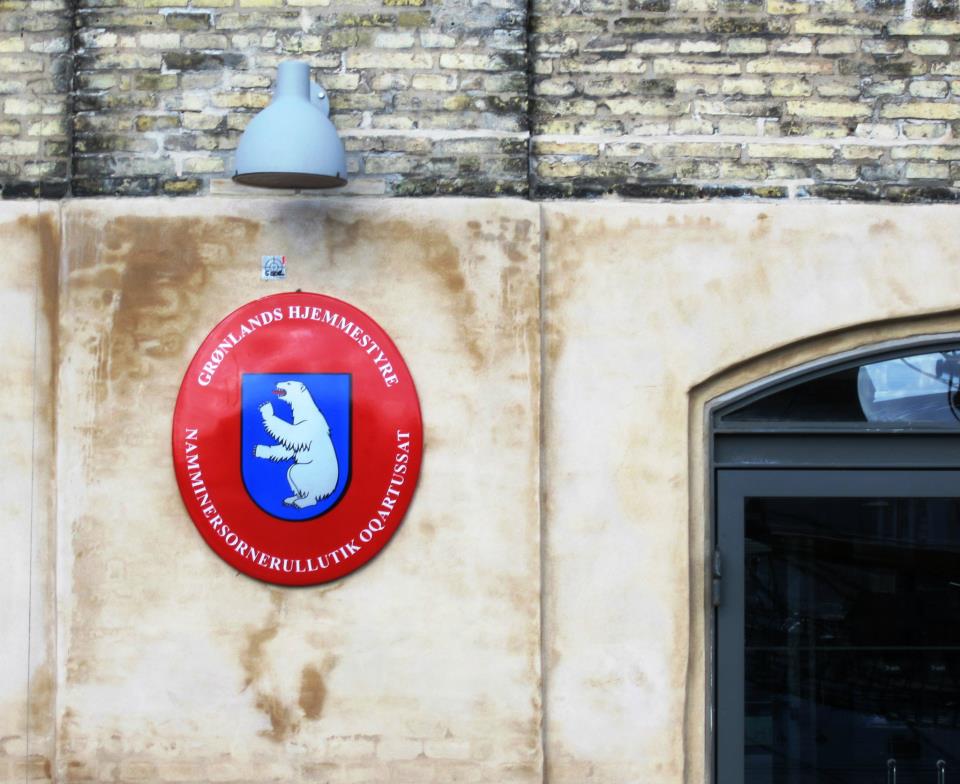
Danish is widely spoken in our office as it is the common language known by everyone in our two locations (Copenhagen and Nuuk)—not everyone working at Visit Greenland speaks Greenlandic or even is from here. In fact, a lot of the business people from Greenland are Danish by descent and have come here for the opportunities the country affords. Even those growing up in Greenland now often speak Danish but not Greenlandic, showcasing the change in culture happening right before our eyes. The majority of signs are in both languages, and businesses often have their information in three—English, Danish, and Greenlandic. After being in Copenhagen the last month I can pick up on and read more Danish than I was thinking I would be able to at this point, making life a bit easier as there is no feasible way to even start learning Greenlandic for an English speaker.

Faroese—the language of my host—is one I have not yet gotten used to hearing. As Roar plays traditional folk songs and sings in his powerful deep voice, I have learned to focus on the music itself and the meaning behind it rather than the words. His obsession with music from his homeland has been comforting in a lot of ways my first few days here, providing me with a songtrack to my own journey far from home in a land vastly different from my own.

And, of course, English. The language I hear while speaking with Sarah, when the office is talking to either of us or feeling kind and speaking in our presence, and on a scarce few programs on one of the four channels available on our TV in Nuuk. The Danes in Greenland are almost all fluent in English in a way that puts our language skills to shame—however the people who work in everyday places, who have deep roots to Greenland, often cannot understand a word I am saying. My first trip to the grocery store ended in mass confusion for the girl taking my money as she could not convey to me the reason why she had her hand out still after I had handed her 350 kroner for a 335 bill—and to this point, I still do not know what she wanted or why she stared so blankly at me.

I had thought I would feel partially helpless knowing limited Danish only and with a lot of the population not speaking English at all or, if they do, as a third language—especially after living in Denmark where as soon as I smiled and said ‘hello’ everyone and anyone would change tone and switch languages as though it were nothing—however, the lifestyle here has culminated in such a kind and relaxed atmosphere that the differences in understanding one another are nothing to be concerned about, and are not taken as a problem. The fact that outsiders so rarely come, especially Americans—everyone I have spoken to can identify only two Americans living in Nuuk in total—not speaking the language or being confused in a situation hasn’t resulted in shame or embarrassment as it would in another country where people would roll their eyes and think to themselves ‘stupid American’ (as at least the scene plays out in my own head), but a genuine curiosity and kindness exists. Here, speaking English and being American doesn’t bring the exasperated sighs or the immediate stereotyping (that I can see outright as in many other places), but in fact gives the opposite—a simple acceptance and aid if necessary, a symbol of the people in the Pioneering Nation that is Greenland.


Monday, May 28, 2012

5/28/2012- Musings from Greenland (Nuuk, Greenland)


Two things said by Anne Mette caught me off guard and made me think.

“If you’re sick just go to the hospital, and don’t even bother trying to show them insurance—they wouldn’t know what to do with it and it would just complicated the matters. Simply give them your address in Nuuk, and you’ll get all the medication and service you need for free.”

“Feel free to sign out the company car and drive anywhere. You don’t need an international driver’s license; the police if you were stopped wouldn’t know the difference between your US license and the international, so you’ll be fine. Oh, and be careful at the two traffic lights—they’re the only two in all Greenland, and often people from the settlements driving here will stop in the middle of the road confused at what to do when they see it or not stop at all because they have no idea what it is.”

I’m making a point to not be political in any conversation I am having while here but rather to simply listen in, and this blog will be no different. What I took away from these two statements wasn’t an idea of one government system being superior or inferior to another, but a representation of how simple and pure life can be here. Hearing these comments made me realize what I had heard about hiking was correct—you can hike anywhere in the country outside the national park as no one owns any of the land, not even what your house is on. Land belongs to the people, and anyone can enjoy it.

My second day in Greenland after a morning chatting with the man I am staying with, Roar (and this is not an alias; he is from the Faroe Islands—though his name is quite possibly one of the coolest in the world,) I walked from my home in Nuussuaq to work on the coast, about a 30-40 minute trip. It took longer than that, about an hour, since everyone was outside to enjoy the weather on the holiday and would stop to greet everyone passing them on the street. Nuuk has a population of around 15,000 people, making it one of the smallest capital cities in the world, and unlike in the US when you’re often asked ‘you’re from Brookfield? Oh, do you know so-and-so’ when you know for a fact that no one will ever know who is being spoken about—here, the answer is generally yes. For example, to explain where we are living to the office Sarah and I gave our host family’s first names, and everyone immediately knew who they were and what they did. Even when I remembered nothing about the man I spoke to on the plane at Kulusuk, everyone I have spoken to here about him could infer who I was speaking about by knowing that he owned a business in Paamiut and lived in Nuuk.

After arriving at the office I sat on the rocks outside which separate the ocean from the road. Boats of all sizes shot by while families gathered to have a smoke and watch for whales nearby, and I enjoyed watching the contrast of people out on the water to the colored houses outlined by snowcapped mountains behind them for a good while. Ever since Semester at Sea I have found myself calmest and most at peace when I am looking out over the ocean, hearing the waves and knowing the power of what is before me—sitting on the rocks rivaled being in the middle of the ocean under the stars for me. I could only imagine sitting there in the dead of winter during the three month darkness that envelops the Arctic region, watching the sky light up and dance.

I’d wondered how I would enjoy being in a place where internet is so costly its prohibiting, grocery stores stock what can be shipped in from abroad and are subject to the weather, and few people speak my language. Admittedly, my opinions could possibly change in the coming months. However this move has already clearly been the best thing for me at this point in my life. The purity of the air and the break from ‘reality’ are saving me from the neurotic, dependent, type-A personality I had slowly been becoming while working full time and working on my Masters. My days these past few years had consisted of waking early to sit at a desk for a job that I had no passion for, not moving until it was time to ‘go home’, when I would walk a few buildings over and sit another few hours for class. I’m eternally grateful for the opportunities the job and degree have afforded me, and always will be—however, I could see myself becoming comfortable.

Comfortable... that is the word I’ve avoided like the plague. In my opinion, when you become comfortable, it’s time to move on, try something new, jump off a new cliff into a new ocean, lest you become stoic and settled.

I truly hope that I’m never comfortable in my life.

…and that, my friends, is how you skip conversation topics and write what’s on your soul.


Sunday, May 27, 2012

5/27/2012- Second Impressions (Nuuk, Greenland)


I’d heard the two former interns from Visit Greenland, SungHa and Natasha, say countless times how beautiful Greenland is and how much of an effect it has on you being there. I believed them to an extent—believed that it was in fact beautiful, but that it would compare to other destinations I had been to previously, such as Alaska.

It took me two minutes, a thousand feet above the ice pack and mountains outside Kulusuk, to understand what they were talking about.

Silently and in awe I watched out the tiny window as we passed over the receding ice pack, putting all stories, pictures, and BBC specials I’d seen about it to shame. It went on for miles upon miles, with icebergs and sheets flowing out and away from the mountains inland. It looked something like a puzzle of white ice among a dark blue background, with the pieces of differing sizes and shapes. The mountains in the background framed the picture, jutting out from the coast and covered in snow, like something out of an apocalyptic end-of-the-world image. As we maneuvered around and through the mountains to land in Kulusuk, I thought to myself calmly that if I died, if the worst case scenario happened and our tiny plane hit a bad wind and crashed into the side of one of the majestic mountains, I would be okay with it because I had seen something so otherworldly. The tight grasp I had had on the seatback in front of me out of fear was loosened and my entire body relaxed.

After landing we exited the plane so they could refuel, and laughed at four foreign men who fell to their knees and prayed that we had landed safely (which made me feel better than I was not the only one bothered by the turbulence and the impact it had on our tiny plane). The six or so of us continuing on to Nuuk waited in the airport, which consisted of two rooms separated by a small shop. I spoke with one of the Danish visitors, who has been working in Greenland for years and has been asked to run tourism in one of the settlements, Paamiut. He told me a few stories about his settlement and we relaxed until the plane was ready to take off once more.

Upon boarding the plane again, we were surprised to note that it was now full with East Greenlanders, mostly natives who were boisterous and had moved our things about the plane to sit together. I ended up in back next to an older Inuit woman, who didn’t speak a single word of English yet took great glee in pointing at things out the window and sharing the Greenlandic names with me. When I pulled out a map to continue memorizing the names of all settlements, she got even more excited and grabbed my arm, pointing to herself and then pointing at a city wildly, giving me a toothy grin as her family sitting around us all laughed. After a few minutes of me looking around her she gave me her seat so I could watch out the window, though due to wind issues, after a short time we ascended above the cloud cover. For the entire two hour flight I watched out, excited to see through breaks in the clouds and catch glimpses of the endless snow and mountains below.

When we descended below the cloud cover, winds overtook the plane and we started to be thrown about. Despite the beautiful scenery outside I grasped the armrests and the woman beside me rubbed my back, trying to comfort me. I was amused at the scene—a native Greenlander wearing traditional jewelry and clothing, who did not look as though she traveled much from home, and she was comforting someone who had flown over ten thousand miles the previous year on varying flights.

There was no customs and baggage claim consisted of a single looped conveyor belt which whipped bags out at a speed I thought impossible, flinging a bag out at one point and into the waiting crowd of children and adults crowded into the tiny room. Anne Mette then took me from the one roomed airport and to my home for the next four months—a beautiful light wood apartment with white walls to capture as much light as possible during the endless night winter months (as the sun does not rise for about three months in Nuuk). What enticed me most were the views—mountains reaching into the clouds surround the ‘city’ (and I put that word lightly, as Nuuk is one of the smallest capitals of the world by population at just around 15,000), capped in snow, while each building is painted brightly in colors spanning beyond the rainbow. My room looks out directly to the mountains with houses decked in colors at the base, with snow banks melting into rivers below. Although it is not yet summer, the snow is melting and the sun is out for twenty or so hours a day, giving precious little time to sleep in darkness before the sun comes up over the horizon once again at around 0200.  

Time to enjoy for that 'precious little'. Night!


Saturday, May 26, 2012

5/26/2012- First Impressions (Kulusuk, Greenland)


I suppose the ‘proper’ way to start (or in this case, restart) a blog is to introduce the situation I’m in, and what reason I have for starting a blog when there are oh so many ranging all topics from what to do if your cat decides to start barking like a dog to steps in adopting a pet zebra. So, here goes.

My name is Sharon Clay Testor, and I’m 24 years old. I’ve spent the past two and a half years working full time while taking night and weekend graduate school classes. I graduated with a Masters in Tourism Administration and a concentration in Sustainable Destination Management from The George Washington University one week ago, and am currently on a flight from Keflavik Airport in Iceland to Nuuk, Greenland, where I will be living for the next four months and working as an intern with Visit Greenland—the national tourist board for the country. I spent the month of April and the start of May in Copenhagen, Denmark while working in the Visit Greenland representation office to train for and prepare for these next four months. While in Greenland, I’ll be working on a variety of projects, mainly focusing on the cruise and coastal sailings sector—i.e., how to plan for, market for, and manage ships from less than 100 passengers up to large cruise ships which call on Greenland in a sustainable manner.

I’m currently on my flight- a Dash 8-200 Air Greenland plane which holds 37 passengers and has only 14 of us onboard. It’s stopping in Kulusuk in eastern Greenland, then taking off again to bring the rest of us to Nuuk, the capital city. The door to the cockpit has been open the entire flight and security in Reykjavik, Iceland didn’t notice Visit Greenland had reserved my ticket under Sharon Clay while my passport said Sharon Testor—and somehow, on top of all else, they gave me a boarding pass for Mr. Richard Travis. Compounding my confusion was the fact that security checked my documents, and had no problem believing that I was Mr. Travis (with a passport clearly stating I was American and female—only Sarah—the other intern for Visit Greenland—and I are American on this flight).

I don’t know what to expect when we get to Nuuk, Greenland. I know nothing about the person I am living with other than his name, and have met only Anne Mette and Anders S. from the Visit Greenland office (Anne Mette while recruiting for the office in Washington, DC and Anders S. while working in Copenhagen when he flew in to celebrate Visit Greenland’s website, visitgreenland.com, winning the Webby Award- People’s Choice for best tourism website in the world). I speak very little Danish which I picked up while in Denmark and promptly butchered by adding a Puerto Rican accent (my father is from Puerto Rico and always added that accent when teaching my Spanish, so I unconsciously add that accent onto any languages I learn—Russian with that accent was particularly exasperating for my professors), and no Greenlandic whatsoever, though that will not change as the language is one of the most difficult worldwide. (Try Uummannaq on for size).

If anyone has any questions, comments, rants, whatever—please feel free to comment. As we pay per usage in Greenland for internet I may not respond instantly, but I’ll get back to you as soon as possible.

However, we’re just starting to fly over Greenland for the first time and so I can see the pack ice and mountains, so I’m heading to stare out the window in wonder! Until next time!

Tak!

Sharon


Sunday, April 29, 2007

4/29/2007- Reflections from Hiroshima (Hiroshima, Japan)


I’ve been away from home for over three months now. I’m physically and mentally exhausted, ready to keel over at any moment and give up on this entire voyage. I am run into the ground with emotions and work and experiences and expectations. In a day here I wake up and roll over not knowing where in the world I am or what I’m doing, how long my hair is, or if the vivid dreams I’m having are real or not. Sometimes I’m not even sure what reality is—how can one determine if dreams or life is real, when your dreams seem more real than your everyday life? Last night, or instance, I dreamed that I was home, heading off to school in Rhode Island with long hair and many dreams. Then I woke up to a country on the other side of the world, about to get on a 200 mile per hour train in order to go to the spot where the first atomic bomb was dropped and over 140,000 people died less than seventy years ago. Tell me, which seems more real to you?

I can’t believe I’m here. I can’t believe I’m doing these things, I’ve done what I’ve done and I’ve changed like I’ve changed. It’s as though the old world I once loved is a thousand years ago on a world far from here; a world with no suffering and pain and death. A world which housed worries such as who had the better car and who had the hotter boyfriend is dead to me now, replaced by a world in which less money than I spend on snacks in a week can feed and house a child in Mauritius for an entire year. There are times in which I have wanted desperately to go back to being ignorant of these things, but moments later I realize that there is no going back and that it is better that way. I am a different person than I was back then, and it is all for the better.

On the ride to Hiroshima these thoughts haunted me. As I watched unfamiliar landscapes become familiar, I thought of all I had both lost and gained on this voyage. I didn’t understand a single word that was being said around me, but strangely enough, it didn’t matter. I felt as though I understood these people more than I understood the people from my own country simply because I can make up conversations they are having. To the best of my knowledge they are talking about how to help those starving and being murdered, though inside I know that they are probably talking about the same things my classmates are talking about back at the bars. As I said before, ignorance is bliss.

I chose to experience Hiroshima alone because I knew it was the final large trip of this voyage for me. I needed to try and sort out some things because it was the last chance I had—on the ship there is no time or place to be alone and reflect, and that was all there was left before being thrown into the lion’s den back at home. “What was your favorite port,” they’ll ask. “-and what did you learn? Did you have fun? Was it worth it? Did you see anything crazy?”

“What was your favorite port?”—there wasn’t one. All but a few touched my heart in ways that are unexplainable in words. “What did you learn?”—I learned that everything I’ve lived for has been a lie and a joke. That all the things I’ve held dear to me have no value. That everything I’ve ever known is nothing at all. “Did you have fun?”—yes. No. Maybe. God, how can you answer this question? I loved this voyage with every fiber of my heart while hating it at the exact same time. There were days when I couldn’t stop laughing and days when I couldn’t stop crying. Fun? That wasn’t part of the description of Semester at Sea. It isn’t about fun, although I’ll admit to having some of it. No, this wasn’t about fun. It was about torture. It was about the way in which you torture yourself by growing more than a normal person does in a lifetime or more in the course of three months.

“Did you see anything crazy?” No, I saw nothing crazy. I only saw people sleeping in puddles of mud and missing limbs and carrying their near-dead babies and sobbing and praying to God or Allah or Shiva or whatever they may or may not believe in. I only saw babies deformed and parents gone and AIDS ripping the world apart, but the people still thankful for every damned breath they took. I saw nothing crazy at all in this time. After all, the majority of people I saw were actually happy to be living in these conditions. How can it be something crazy when people are actually smiling when they are dying? It isn’t crazy that people are so thankful simply being alive that they can live in these conditions day after day and still be thankful to be alive.

Hiroshima. Reality. Where I was, rather than where I’d been. As everything else on this voyage, it was something out of a dream. The dome in front of me, the paper crane memorial to the side, Japanese children running all around as though there were no worries in the world—this is what I saw. It’s hard to imagine that this was one of the last wars that we were in; in what seems like no time ago, these people were our enemies and our targets. Now here I am, helping the children practice their English as they gleefully laugh at my accent when I say my name. I can’t help but wonder, though, if this is what life will be like for us in fifty or sixty years. I’m watching the children laugh and play on the monuments as their elders look on with sad eyes as they see their friend’s faces reflected in the shimmer of the sky—will I be these elders in time, watching as the children of the former Taliban take pictures of Ground Zero while my own grandchildren chat with them and laugh? Will I see Andrew and Candace’s faces crying and begging for her plane to stop and his body to be caught from his fall as I watch the children of our country swing on the replicas of the twin towers, not knowing what it was like to experience both watching that day and losing friends? Is that how these people feel, remembering the sudden heat and the crying voices and those they left behind?

I don’t know what will happen when I get home. I don’t know what will happen when I grow old. I don’t know what will happen when the years pass by and the world changes once again, leaving my generation for forgotten and what once mattered in the dust. I don’t know if any of this matters at all in the long run; but looking at the Peace Park and the Townships and the Dalit villages and the indigenous people from all around the world, I know for absolute sure that everything will be alright. As long as there is life, everything will be alright.

Friday, April 20, 2007

4/20/2007- China's Paradox (Beijing, China)


China is the biggest paradox that I have ever experienced.

You hear about their great and long history dating back to before written time before hearing that it is expected to be the world’s greatest hope for a technological future. You eat food that is from the most basic of supplies, only to taste the some of the greatest flavors you have can imagine in your life. You see these temples and palaces where less than a hundred years ago only royalty was permitted, only to be shoved by the twenty thousand tourists on their phones and yelling to one another.

Unfortunately, this last aspect is the one which I will take with me in my stories of this voyage. When reflecting on Beijing, there are no memories of feeling as though I was a part of something much as I did in each of the other ports. Here I felt as though I was one of the masses, forced into the lemming-like state of crowding. The creations that rose out of the world which should have been the most amazing sights of my life were nothing more than walkways filled with unappreciating bodies alongside spots of newly painted color and plaques with cheesy metal figures. It was hard for me to see this, and even harder to discuss it with a faulty member upon returning to the ship. “It’s my thought that in the years to come, China will burst with population. They will spill over to the other countries, but in the meantime, they are so used to being crowded that their monuments will be torn apart by misuse.”

In truth, to some extent this bothers me far more than does the hunger and poverty we’ve seen. Strides have been made in the world to eradicate such disasters and help the victims, however there are no efforts to aid the much quicker destruction of the history of China. Some of the people in danger in other parts of the world such as South Africa and India are known about and cared for as aid and cures are being worked on. By the time that the destruction of the monuments in China is realized by the government, it will be too late. Unlike the populations, however, history cannot be recreated or revitalized. You simply cannot bring back the throne of the first emperor or books written by the ancient historians after they have been destroyed by the people who take nothing but a photograph away from these relics.

Perhaps more disturbing to me was the amount of importance there was on revenue on these historical sites. We had a lecture the night before our sight seeing began in the city, and rather than speak about the historical impacts of the Forbidden City, our PhD lecturer spoke about the Starbucks hidden in the city and challenged us to wander around and find it. This simply encouraged the students to spend the time we had in this centuries old monument searching for a shop that can be found in any city on the globe, only to buy their products and shirts proudly emblazoning the words ‘Starbucks in the Forbidden City!’ for all to see. Hawkers and stalls lined the way, some more pushy than the people in India and Vietnam. They bought their way into the monuments with stolen goods and stood in the way of our reading the run down plaques to sell knock-off Olympic t-shirts and Mao watches. You could not get two feet (which was a hassle anyhow with the crowds in every space available) without having goods shoved in your face, only to cover your ears when the police blew into their whistles and chased the hawkers around in circles.

As terrible as this sounds, the hawkers were the highlight of my time in Beijing. At one point outside Tiananmen Square, the seventy Semester at Sea students on our tour were gathered waiting for the busses to arrive and take us to lunch. Within moments of realizing that there were more blondes than there were anywhere else in the city gathered in the same spot, around thirty sellers surrounded us and took their wares out in hilarious fashions—some opened briefcases or messenger bags, tilting them so that only the person they were harassing was able to see the merchandise. The most amusing of all were the Mao watch sellers who had their supplies tied inside their trench coats, exposing himself much as a flasher would in a run-by nude show. As we bargained and argued with them, yells suddenly filled the sidewalk. Within moments there were twenty policemen in full uniform, chasing the hawkers as they scattered like ants from their hill. One of the men caught turned to his capturer and shoved numerous toys and bags into his arms, paying the uniformed officer to walk away. Somehow, it worked—the man turned his back as the hawker ran in the other direction.

After a few minutes when the police had wandered off to catch more sellers in action, some of them returned to us. They were far more cautious this time, passing money and supplies only when they were inches away from us and looking over our shoulders the entire time. The man who had paid the cop off grinned weakly towards us, pointing to the police in the distance and making gestures that clearly showed a decapitation had he been caught. Not sure what to make of the entire situation and excited over the sudden drop in price due to the need to dump their supplies, we got onto our busses and exchanged stories of what we had seen in and out of the gates. These men, it seemed, were the perfect reflection of what we had seen in Beijing—willing to take any risks of loss in order to make a quick dollar.

Saturday, April 14, 2007

4/14/2007- Snake's Beating Heart (Hanoi, Vietnam)


“Snake palace next,” Doan said firmly. “Look at book, Americans like!” He pulled out the tattered leather book from his jacket and shoved it into my hands, opening to a signature from a man from Arizona a few years back. It was nearly indecipherable due to age and untidy scrawl, but this didn’t bother our motorcycle drivers. “We go there now. You like. Promise.”

Ana went white as she saw the cobra out of the corner of her eye. It hissed and fought as though it knew what was coming next, attempting in vain to kill the both the man holding her and the people watching in horror. The snake’s skull crunched like a walnut under the pressure of his handler’s foot. Its body went limp quickly, and I had a profound sense of dread. We are taught to value life in every form, yet here in front of us this life had been ended with a sudden step. I wanted nothing more than to apologize to the being, although inside I knew that I was more than excited about what was to come. In my classes and my frequent travel channel viewings I had come across this practice; and although Ana had no idea what was about to happen, I was sure I was prepared.

Three men came from the side of the room to each grab a section of the cobra, their hands moving with the sort of expertise that comes with years of practice. I watched from behind the lens of my camcorder as they made a small slice about a third of the way down the animal, taking the heart out and draining the blood into a glass below containing alcohol. Once the two glasses were filled with blood, they moved down a foot to another section and named to us something that we either consciously or unconsciously didn’t understand. Taking the body with some care down the stairs to the side they ushered us to a table and sat us down, gesturing to the glasses with blood and alcohol with huge grins on their faces. Doan had the biggest grin of all.

The taste of snake blood and alcohol is like nothing you can imagine unless you have had it before. It isn’t as much the effect it has on your taste buds, but rather the effect it has on your mind. As the warm liquid slid down my throat all I could envision was the live cobra that had been in front of us only moments before. Although in actuality it tasted like a strong Bacardi mix, when the mind got involved it didn’t matter much the actual taste. All that mattered was the fact that it had been supporting the life of one of my most feared animals seconds before.

Then came the part that, for the first time in my life, made me want nothing more than for my stomach to empty itself right then and there. With a satisfying plop and laugh from the men around the table, Doan dropped the still-beating heart into my refilled glass of snake blood and alcohol.

I am by no means a virgin when it comes to exotic foods. I have eaten crocodile, rabbit, octopus and many other dishes that most Americans would find revolting. I have never in my life shied away from a dish offered to me; however when I looked at the sloshing blood in my glass I felt a wave of nausea pass over me. White as a ghost and shivering, I closed my eyes and tilted the glass back. Unfortunately, my throat was tense from the fear, and chose to become a bit to small for the heart to pass through. The waiters must have been used to this reaction because all of them ran for cover as Doan began to yell for me to calm down. I put my head in my hands and willed myself to just swallow the throbbing mass stuck halfway down my throat and not instead pass it up.

By the time that I had recovered and drank more water than I had consumed in the past month, the men returned with an odd looking dish. The other driver, the same evil grin on his face, pointed at a menu translated into English—‘grilled snake meat’, it read boldly. Before we could look at one another and make a move, another dish was placed before us; this time rice cooked in snake fat. To top it off, they brought out two more glasses of alcohol and happily cut open the unknown appendage and mixed the green liquid into them. Although Ana didn’t look too happy, I figured it couldn’t be worse than the beating heart of doom I’d consumed earlier, so I downed the drink in one swallow in order to get it out of sight. Bad idea—I later found out it was bile, and it tasted about as good as it sounds. I never though that I would be trying to get a taste out of my mouth with cobra liver wrapped in omelets, but I found myself doing it after quite possibly the most interesting drink of my life.

In all the owners managed to make our snake into twelve dishes and two drinks, some innovative (snake skin fried in butter and bone crushed with rice cakes to make pancakes) and others more conventional (fried snake meat and cobra soup). We passed on the cooked snake *appendages* (and no, I am not kidding) and happily paid our $40 USD. I wasn’t terribly anxious to get back on a motorcycle in the traffic of Hanoi, especially with my stomach waging war on a full cobra, so we looked around the so-called kitchen and cages where they kept both the cobras and the other animals that they cooked up. Although I was curious about the porcupine (are they even indigenous to Asia?) and the mongoose, the cobra gave a nasty lurch inside my stomach and I decided that it wouldn’t be a good idea to feed it. So we hoped on our rides and left Snake Palace and our money behind, heading for a day filled with adventures that we knew couldn’t top what we had just experienced.